ERASMUS MC • 2023
Building digital tool for early identification and referral of vulnerable families in a safe way
Over a six-month period, I led a design project in collaboration with Erasmus MC as part of the NWO funded research initiative Making Big Data Meaningful for a Promising Start. The project focused on supporting the early identification of families living in vulnerable circumstances.
ROLE
UX Designer
TIMELINE
March 2023 - August 2023
Big data
Predictive models can create distrust among vulnerable families. The challenge was to communicate safety and show the system is supportive, not controlling.
Co-creation sessions
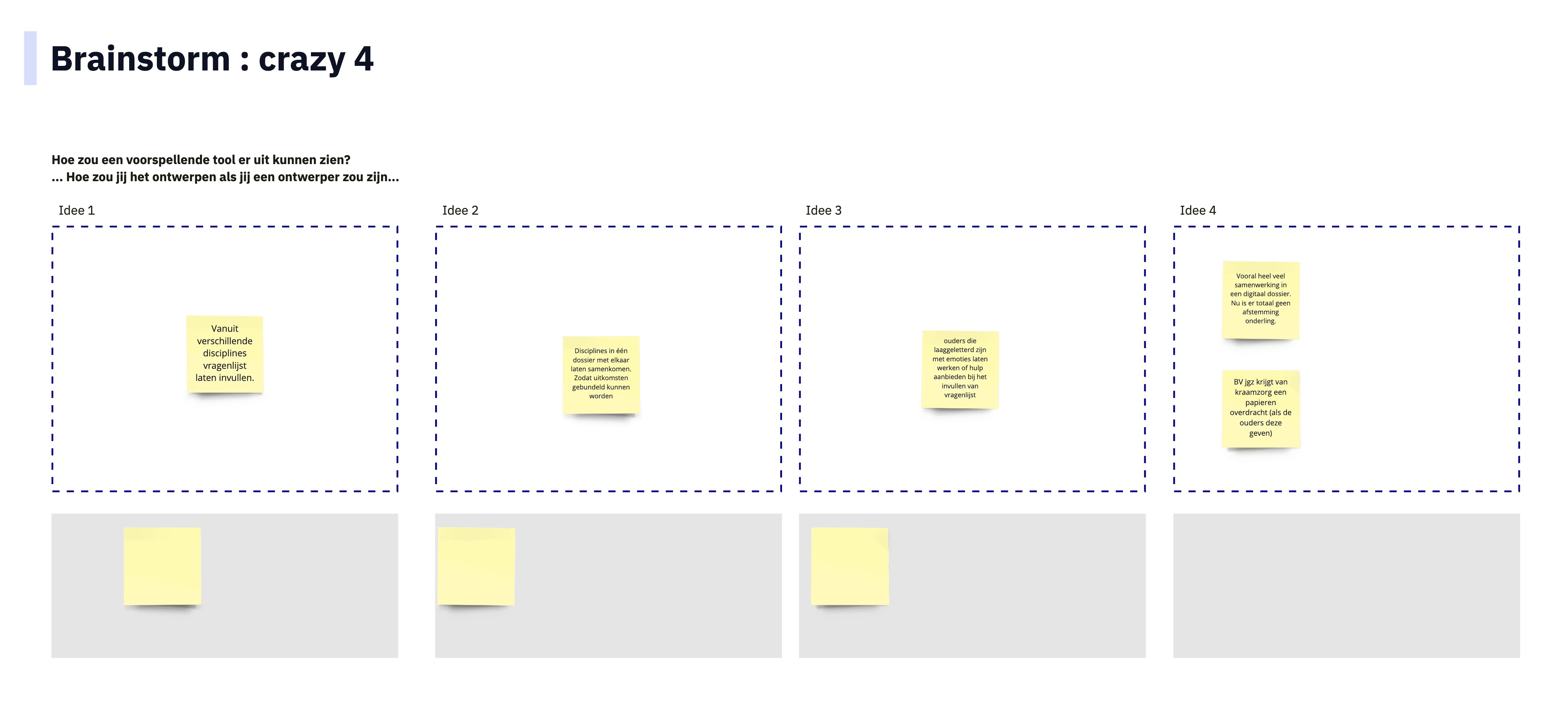
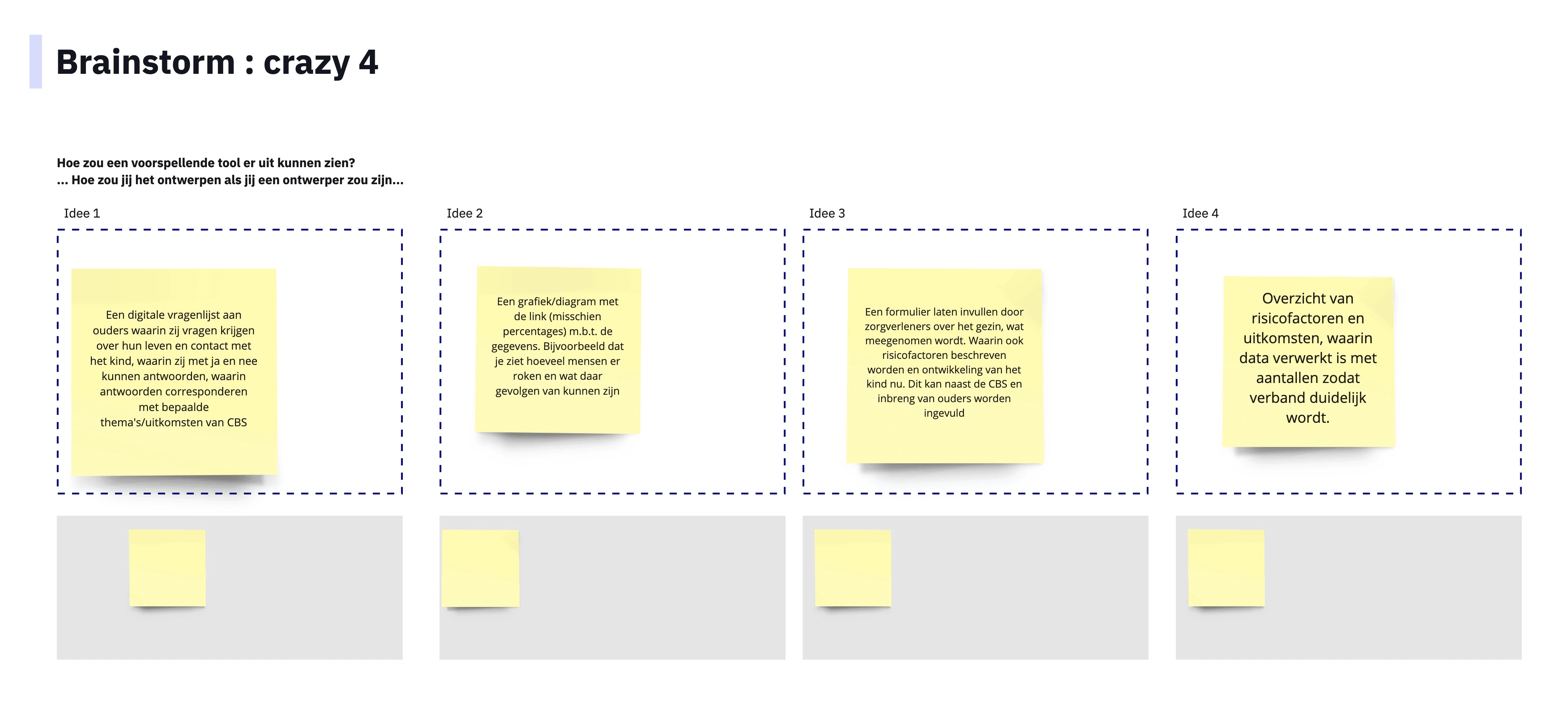
Through co-creation sessions with families, I worked directly with users to design a solution that addressed their needs and concerns.
Prototyping & user testing
The digital tool concept was prototyped, tested, and iterated upon, with insights and design recommendations fed back into the ongoing research project.
PROBLEM
Vulnerable families who need support the often hesitate to use government related digital tools due to distrust, leaving critical needs unmet
APPROACH
Bridging the Gap: Co-creation & Sensitization with Parents
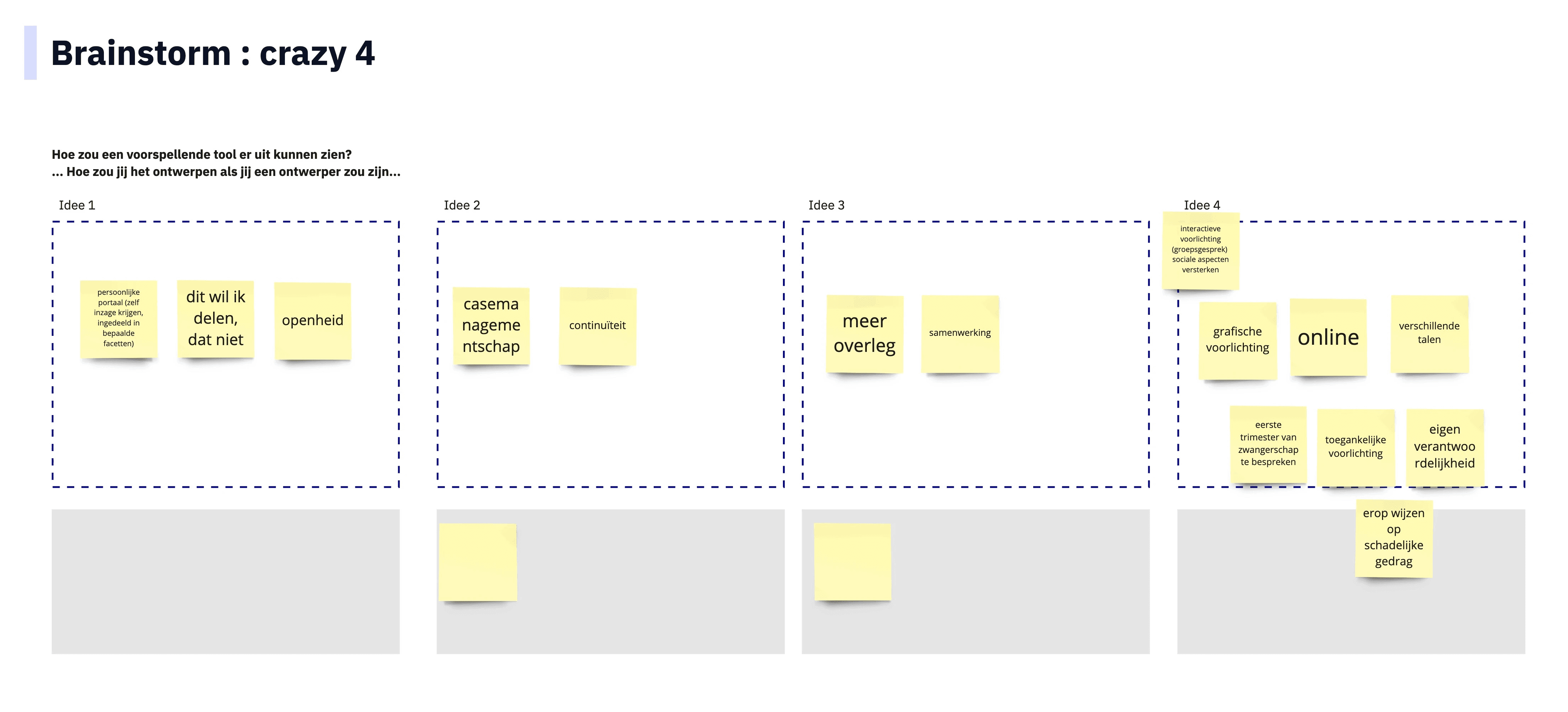
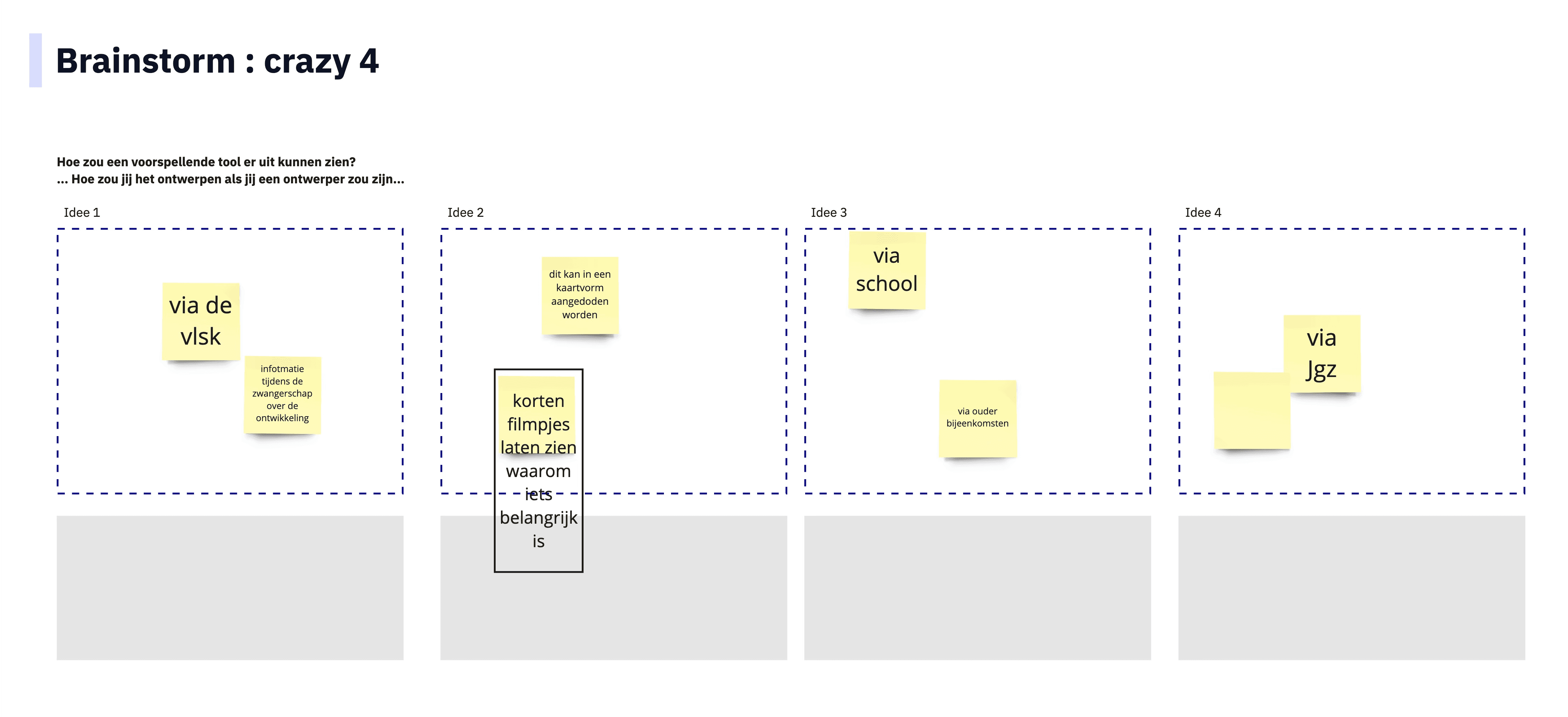
Engaging parents through co-creation sessions and sensitizing tools helped bridge the gap between families and the project. Direct collaboration allowed me to gain deeper insights into their frustrations and needs, which were continuously fed back into the design process.
By organizing these sessions, I also helped create an open and safe environment where parents felt comfortable sharing their concerns, shaping key features and considerations on the project.
KEY THEMES
Acknowledgement
Parents want their concerns to be taken seriously. Their fears, potential consequences, and anxiety around being “labelled” need to be acknowledged and actively mitigated.
Safety
Parents’ hesitation to share information with healthcare professionals often stems from concerns about potential involvement from Jeugdzorg. Creating a strong sense of safety and trust is therefore essential for parents to feel comfortable using this tool.
OUTCOME
Empowering parents with a self-directed support tool
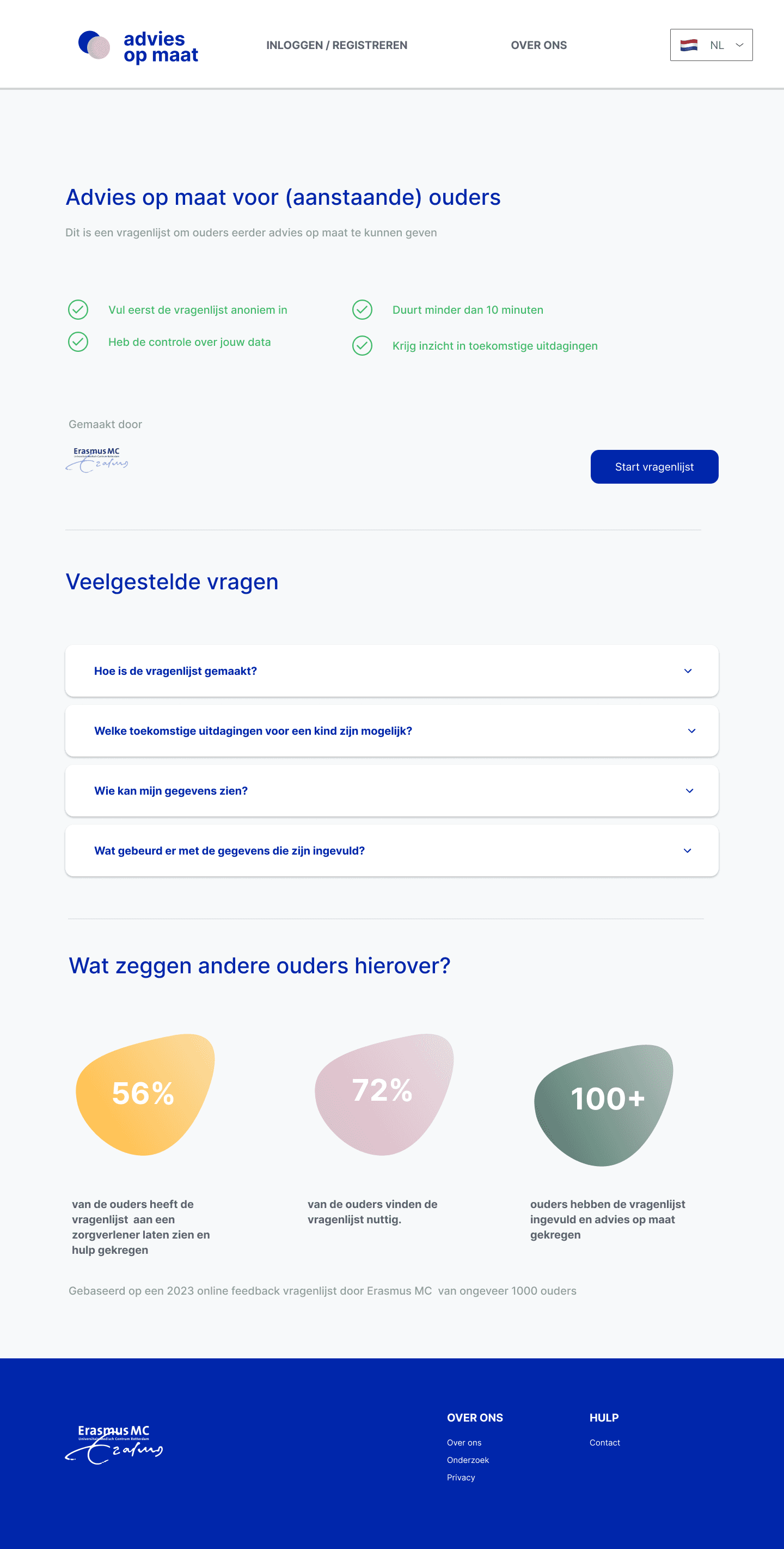
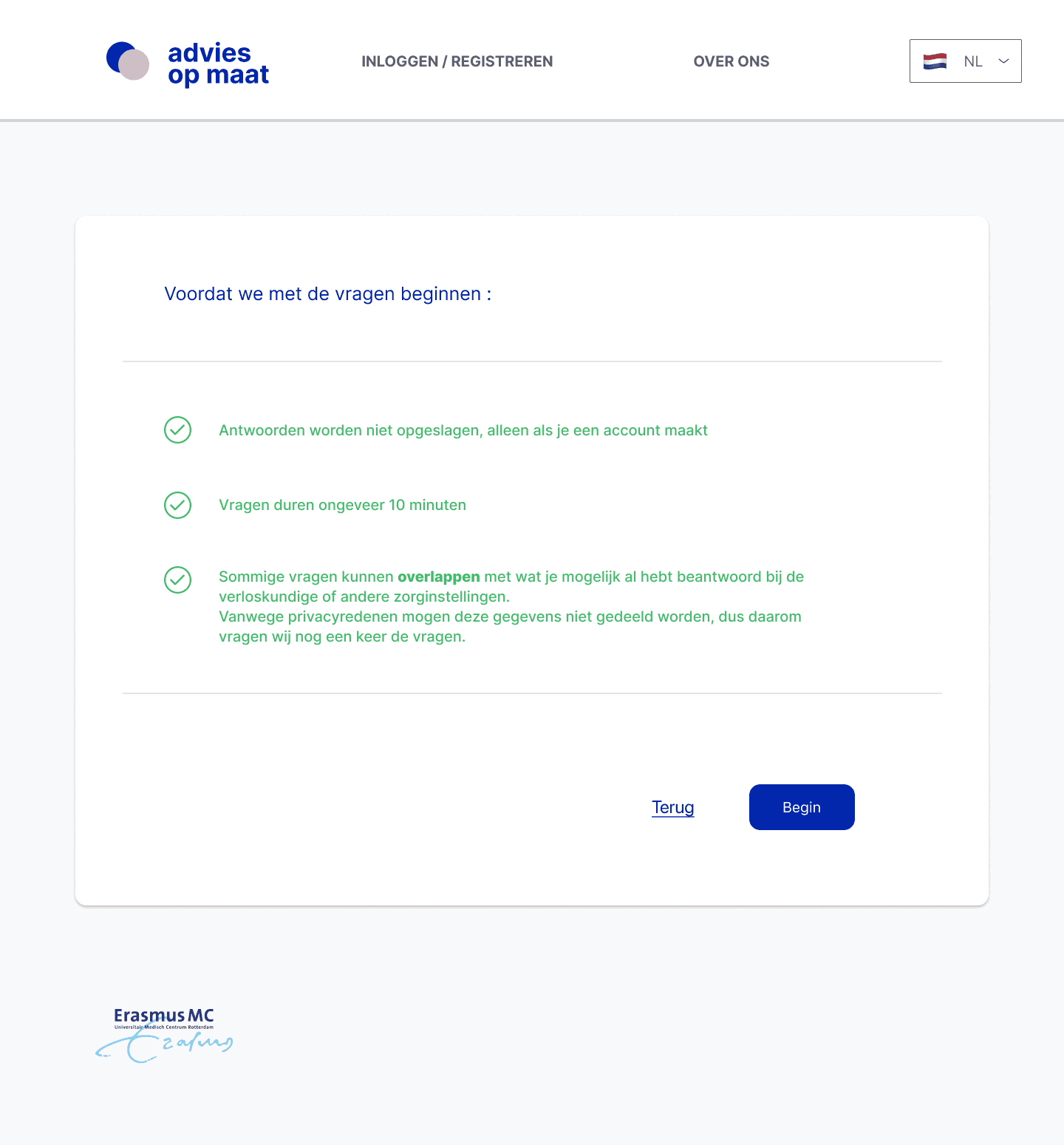
The project resulted in a concept where parents can answer questions freely, without automatically sharing responses with healthcare professionals. Based on the key themes identified, the tool suggests relevant support organizations and provides guidance tailored to the answers given, while keeping full control in the parents’ hands.
The resulting insights and recommendations were shared to support the ongoing research project at Erasmus MC.