PICNIC TECHNOLOGIES • 2022

BACK

BACK

Designing the first planning tool for fulfillment center employees

Over six months, I contributed to the early design of an internal planner for runners in a fulfillment center, identifying key usability and workflow challenges.

ROLE

UX Researcher

TEAM

PO, PM, UX Designer, Copy writer

TIMELINE

April 2022 - September 2022

User testing

Rather than conducting generative research, this study focused on usability testing of features, specifically the login screens and the initial planner experience.

Rather than conducting generative research, this study focused on usability testing of features, specifically the login screens and the initial planner experience.

Iterative 6+ feedback cycles

Through iterative testing, we evaluated the planner’s more complex features to understand how users select and transfer their shifts.

Through iterative testing, we evaluated the planner’s more complex features to understand how users select and transfer their shifts.

First V1 shipped 🚀

After thorough experimenting and testing we were able to ship the first version of the internal application into production.

After thorough experimenting and testing we were able to ship the first version of the internal application into production.

PROBLEM

Fulfillment employees need an intuitive way to plan and change shifts, as the current non-internal system is used inconsistently and should be standardized across all fulfillment centers

APPROACH

No generative research. Here is why:

Since the project was in its early stages but the solution space was already largely defined, the focus shifted away from broad generative research toward evaluative methods such as user testing.

The process centered on repeatedly moving through the define and develop phases, iterating on the planning flows and validating decisions through testing until the solutions met both user and business needs. This approach allowed development to run in parallel, with validated flows handed over to developers while design continued refining and testing subsequent flows.

Together with the UX designer, this work was carried out in two-week sprints, during which we visited users at different fulfillment centers to test solutions and gain direct insight into their day-to-day workflows. Key flows tested included login, shift changes, and shift pickup.

Since the project was in its early stages but the solution space was already largely defined, the focus shifted away from broad generative research toward evaluative methods such as user testing.

The process centered on repeatedly moving through the define and develop phases, iterating on the planning flows and validating decisions through testing until the solutions met both user and business needs. This approach allowed development to run in parallel, with validated flows handed over to developers while design continued refining and testing subsequent flows.

Together with the UX designer, this work was carried out in two-week sprints, during which we visited users at different fulfillment centers to test solutions and gain direct insight into their day-to-day workflows. Key flows tested included login, shift changes, and shift pickup.

SOME INSIGHTS…

In cases where a worker requested a shift that was still pending lead approval, we noticed confusion around the request status, highlighting the importance of clear copy in the design.

We observed that workers often claimed multiple shifts, which led to planning challenges, especially for popular shifts. In practice, shift swaps frequently happened last minute through external tools like WhatsApp.

For workers with contracted hours, full-shift swaps or drops did not always meet their needs, as many preferred the flexibility to manage portions of shifts, such as mornings or evenings.

OUTCOME

First V1 of "Work App"
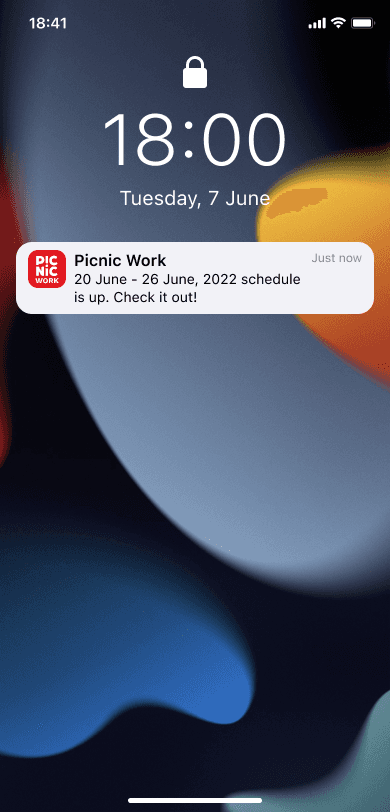
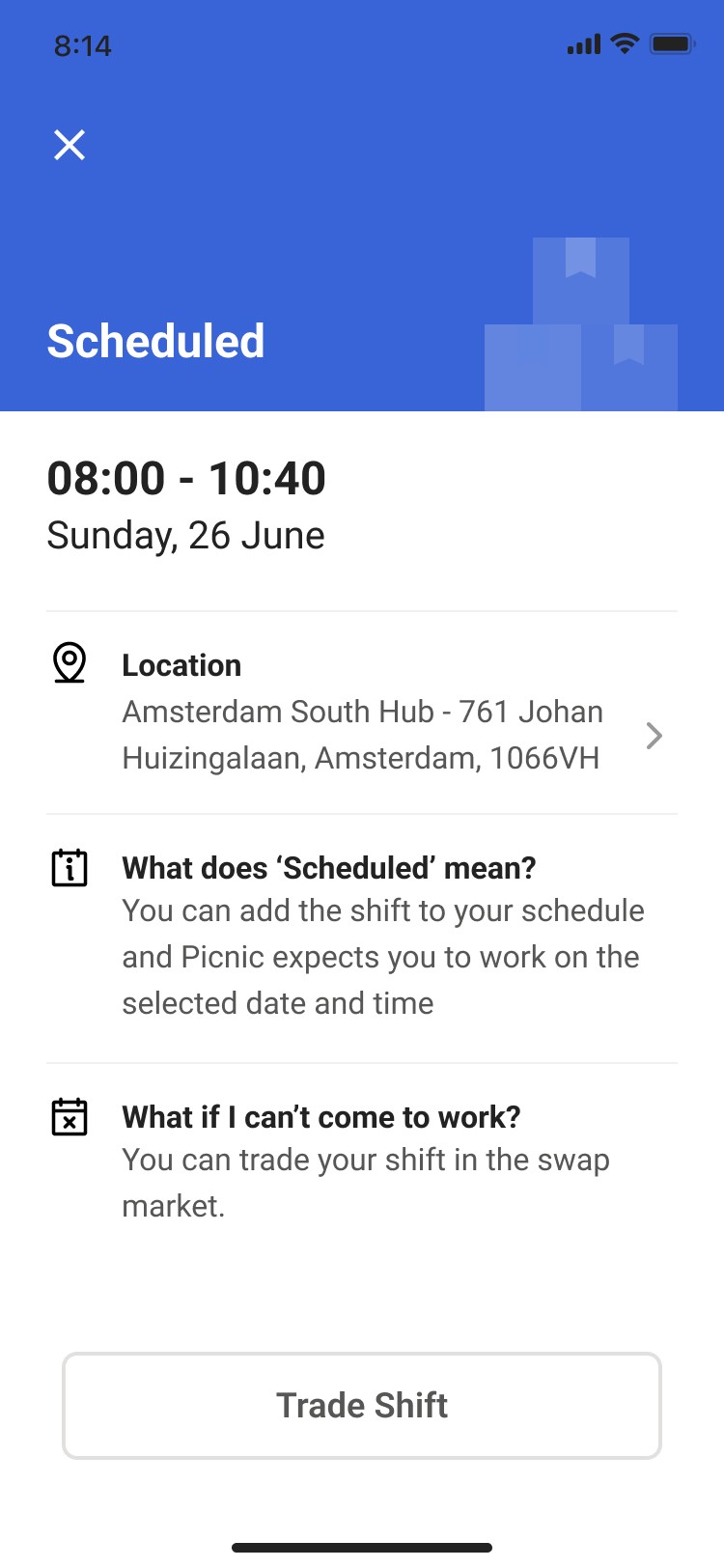
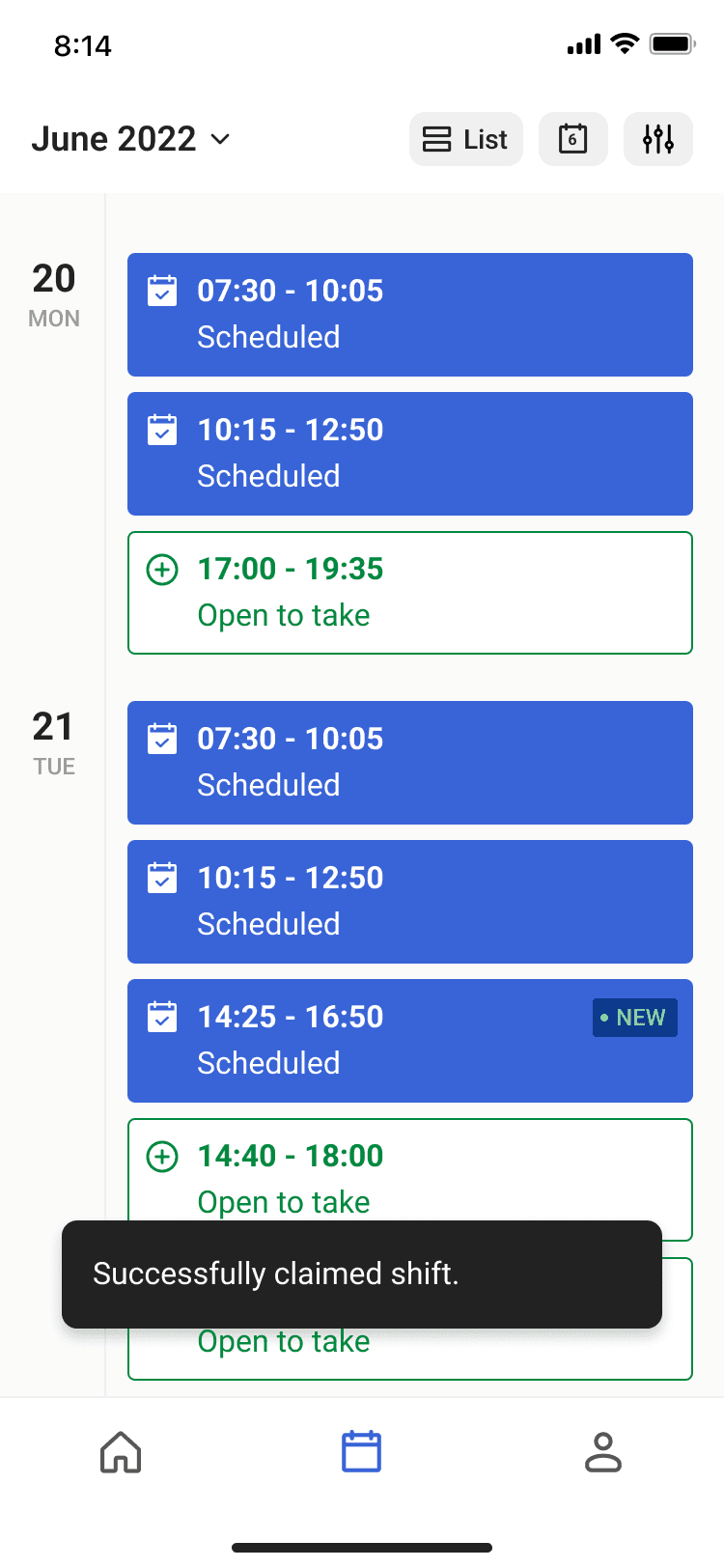
Through more than six rounds of iterative design and validation, the primary flows were refined, validated, and marked as ready for production. The project concluded with a recommendation to deploy an initial V1 and conduct additional post-launch testing across Germany and other markets to evaluate the flows in different languages.

Through more than six rounds of iterative design and validation, the primary flows were refined, validated, and marked as ready for production. The project concluded with a recommendation to deploy an initial V1 and conduct additional post-launch testing across Germany and other markets to evaluate the flows in different languages.

Important to note:
This is not the latest version that went into production.

REFLECTION

"Small scale" user tests can highlight critical issues that can significantly impact the overall project

Early testing with real users helped uncover underlying planning structures that directly influenced how the system needed to be set up technically. This experience reinforced the importance of consistently testing my assumptions as a designer, even when potential issues aren’t immediately visible in the interface.

Early testing with real users helped uncover underlying planning structures that directly influenced how the system needed to be set up technically. This experience reinforced the importance of consistently testing my assumptions as a designer, even when potential issues aren’t immediately visible in the interface.